
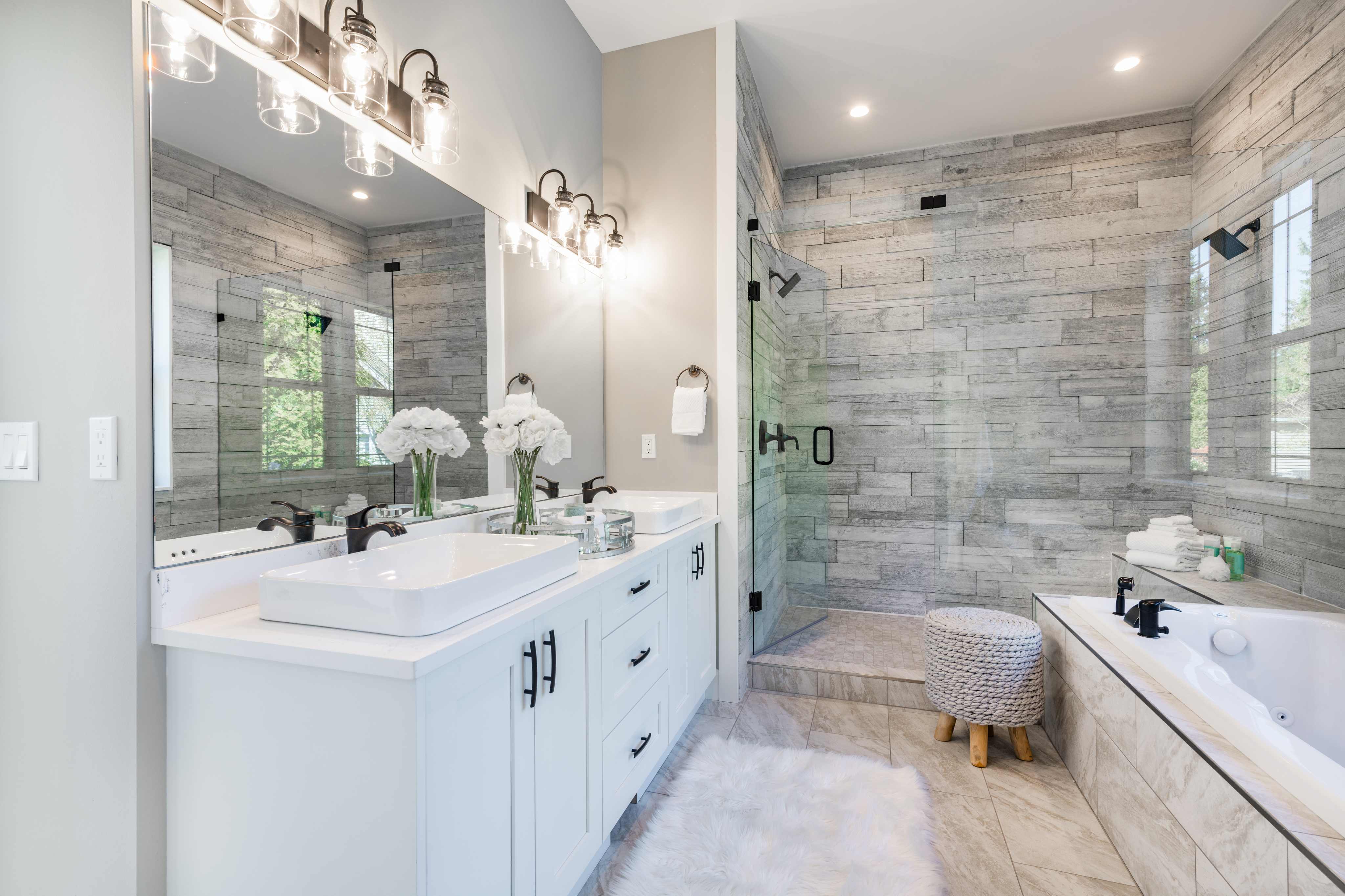
What a master bathroom renovation actually costs, line by line, plus the design decisions that matter most and the ones that quietly drive up your budget.
See Your Remodel + Price in 2 MinutesA master bathroom is the one room in the house that is entirely yours, and it is usually the last one to get attention. Most homeowners live with a dated master bath for years, not because they like it, but because they cannot picture what the finished version looks like or what it will realistically cost.
This guide fixes both. Below you will find a full line-item cost breakdown, the design ideas that actually change how the room feels, solutions for small master bathrooms, and an honest timeline. Written by a remodeling team that has been building these rooms for over two decades.
That is a wide span, and the spread is not arbitrary. Three things move the number more than anything else: whether you relocate plumbing, how complex the shower tile and waterproofing are, and what you select for fixtures and countertops. Everything else is comparatively predictable.
Here is where the money actually goes on a typical master bathroom renovation. Use it to see which line items you can control and which are fixed no matter what you choose.
| Line item | Typical cost | What moves it |
|---|---|---|
| Design, planning, permits | $500 to $1,500 | Layout changes, county requirements |
| Demolition and disposal | $800 to $2,000 | Size, tile removal, hidden damage |
| Plumbing and rough-in | $2,500 to $7,000 | Whether fixtures move |
| Electrical and lighting | $1,000 to $3,000 | Recessed cans, heated floor, fan upgrade |
| Shower: waterproofing, tile, glass | $4,000 to $12,000 | Tile complexity, curbless build, glass type |
| Tub and tub filler | $1,200 to $5,000 | Freestanding vs. alcove, faucet selection |
| Vanity and countertop | $1,800 to $6,000 | Stock vs. custom, single vs. double, stone |
| Flooring and tile labor | $1,500 to $5,000 | Square footage, pattern, heated mat |
| Drywall, trim, and paint | $800 to $2,500 | Condition of existing walls |
| Fixtures, hardware, accessories | $500 to $2,000 | Finish level and brand |
| Total project | $15,000 to $45,000 | Layout, tile, and selections |
Two lines deserve attention. Plumbing is where a modest project becomes an expensive one: keeping the toilet, shower, and vanity in their existing positions can save several thousand dollars on its own. Shower waterproofing is the line nobody sees and nobody should cut, because it is the difference between a shower that lasts twenty years and one that rots the subfloor in five.
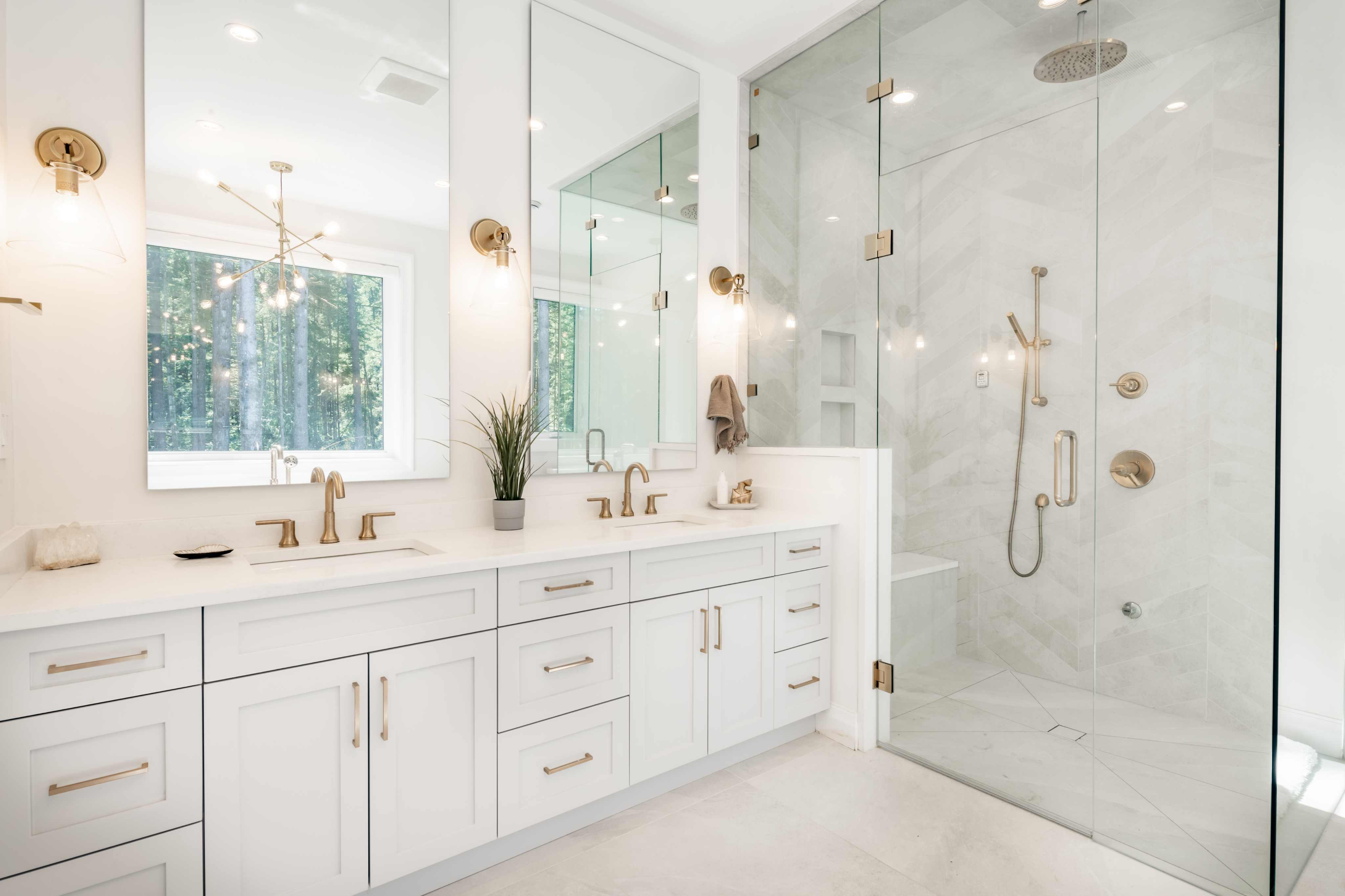
There is no shortage of inspiration photos. The harder question is which ideas actually improve how the room works every day. These consistently earn their cost.
No lip to step over, no shower pan interrupting the floor. It makes the room feel larger, cleans far more easily, and quietly future-proofs the space as accessibility needs change.
The most requested master bath upgrade, and the one people notice every single weekday morning. Even a compact double at 60 inches beats a single with wasted counter run.
Worth it when you genuinely have the floor area. In a tight room, a tub you never use is expensive square footage. Be honest about which one you are.
Built into the wall cavity, so bottles disappear off the floor and the shower reads intentional instead of cluttered. Costs very little when planned before framing.
Recessed cans overhead, sconces or vertical fixtures beside the mirror, and a separate switch for each. One ceiling fixture alone will make any expensive finish look flat.
An electric mat under the tile adds a modest amount to the project and is the upgrade homeowners mention most often afterward. Install it while the floor is open or not at all.
None of these photograph well, and all of them determine whether your remodel still looks good in a decade.
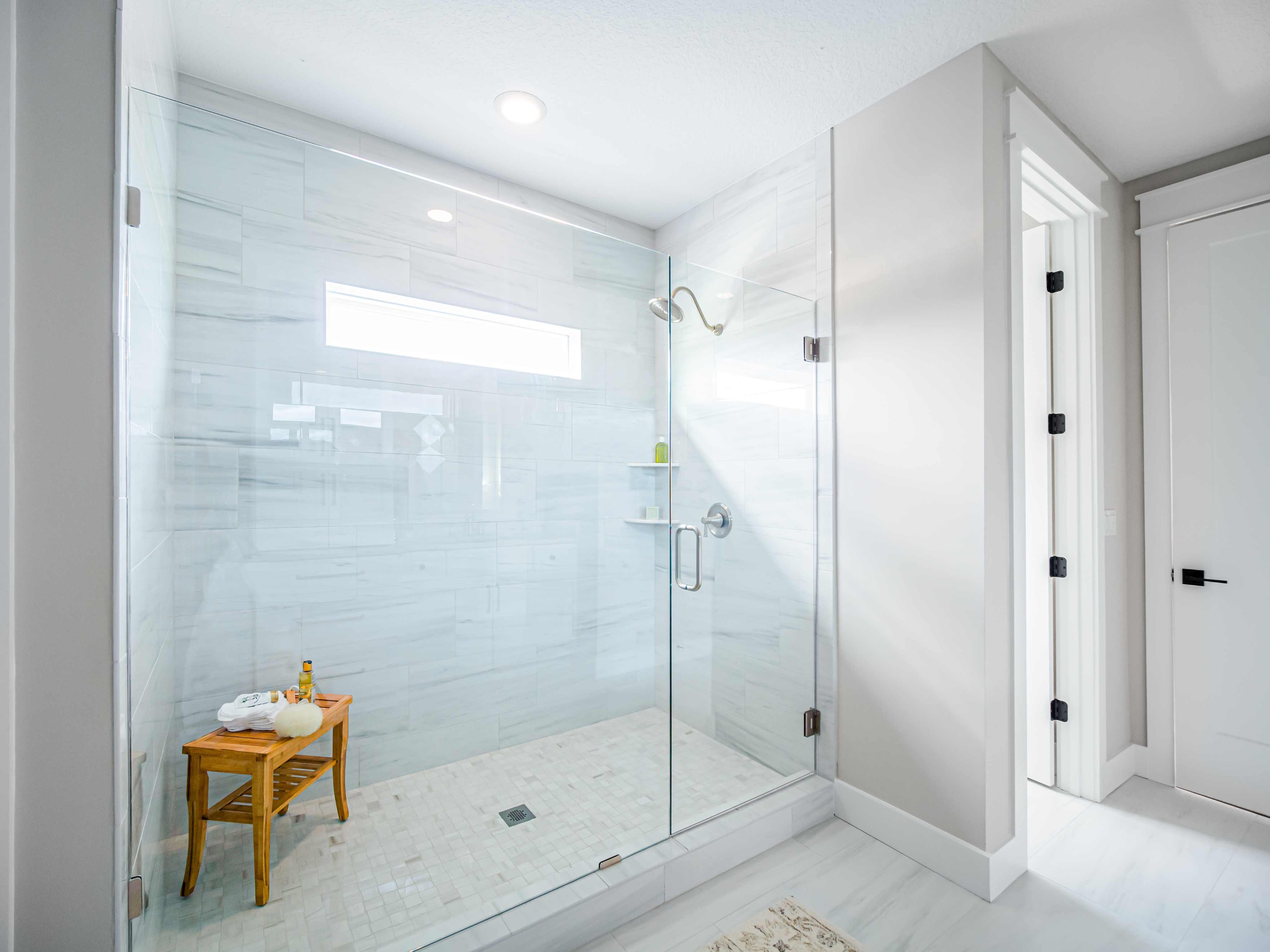
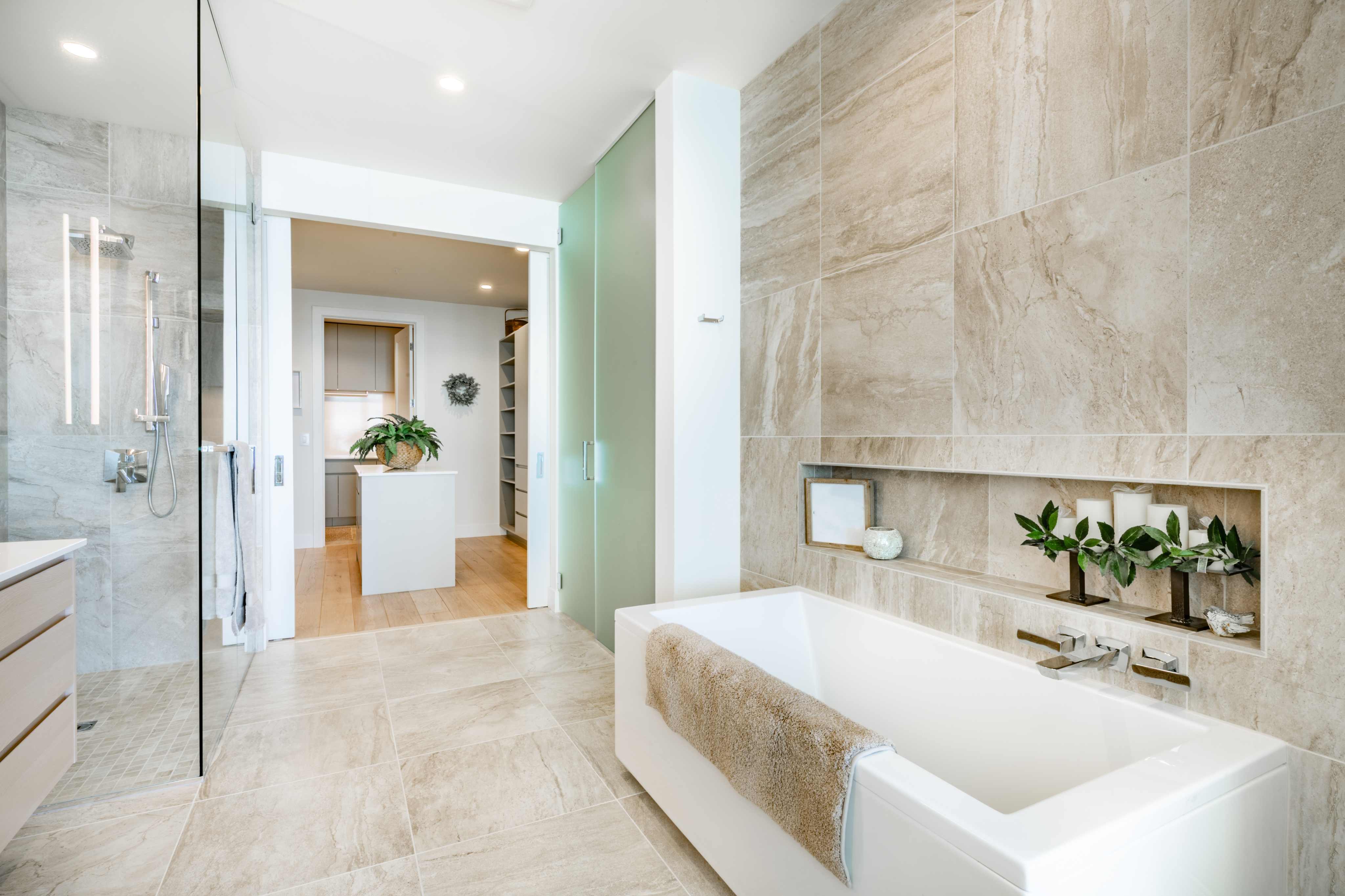
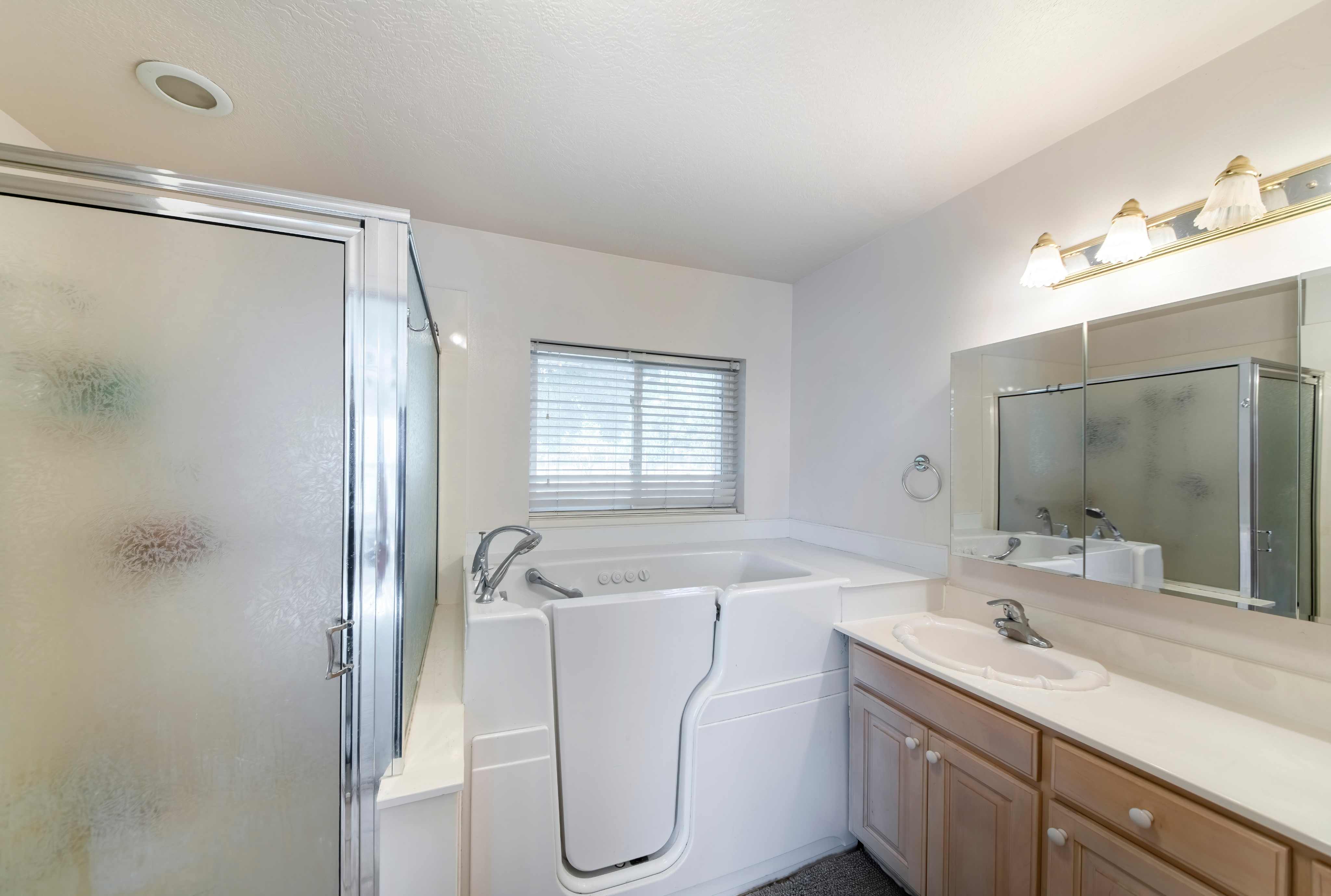
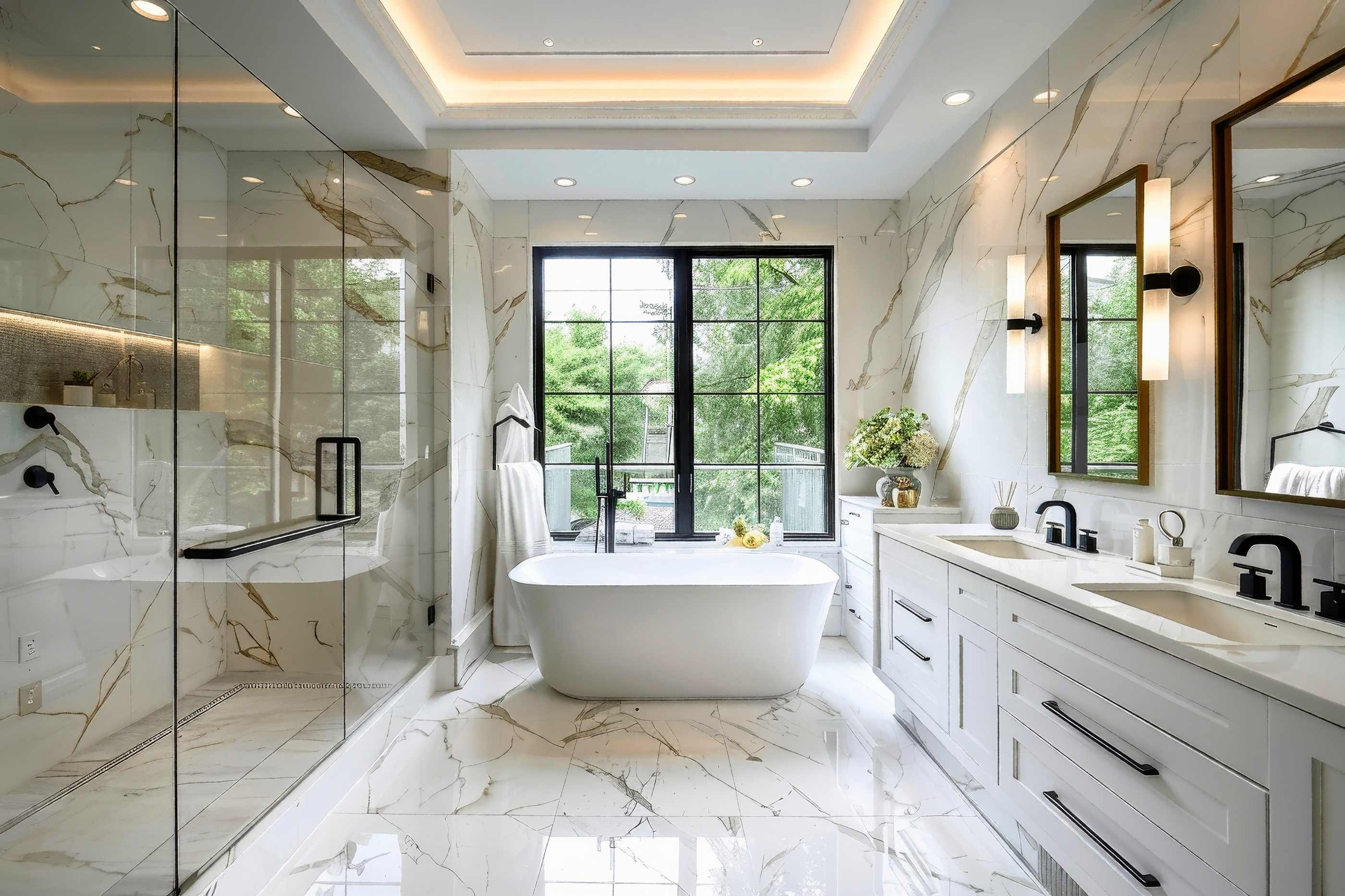
A small master bath does not need walls moved. It needs decisions that stop the room from feeling chopped up. Most of the gain comes from removing visual interruptions rather than adding square footage.
Most master bathroom remodels run 3 to 5 weeks from demolition to final walkthrough. Tile is what sets the pace: waterproofing, setting, and grouting each need proper cure time, and rushing any of those stages is exactly how failures start.
Layout changes, custom vanities, and special-order tile extend that schedule, which is why selections should be finalized before demolition rather than during. What usually derails a timeline is not the construction itself. It is materials ordered too late, poor sequencing, or a crew getting pulled to another job midway through, which is common when a contractor relies on subcontractors juggling several clients at once.
Searching for master bathroom remodel contractors near you returns a wall of five-star listings that all look identical. Ratings are a starting point, not an answer. These questions separate them quickly:
That last question is the most revealing. A one-year warranty, or none at all, tells you how confident a contractor is in work that will sit hidden behind tile for the next twenty years. We back every project with a lifetime workmanship warranty: if something we installed fails because of how it was installed, we fix it at no charge, with no expiry.
Building Success is based in Rockville, Maryland, and the cost ranges above reflect what homeowners here actually pay. We work throughout Montgomery County in Bethesda, Potomac, Silver Spring, Gaithersburg, and Chevy Chase, in Columbia and Ellicott City in Howard County, and across Prince George's, Frederick, Anne Arundel, Baltimore, Carroll, Washington, Queen Anne's, and Cecil counties, plus Northern Virginia and Washington, D.C.
Local matters more than it sounds. Much of the housing stock here dates back decades, which means older waterproofing, undersized ventilation, and the occasional surprise behind the walls. Add humid Maryland summers and moisture management stops being optional. A contractor who works here regularly plans for that, handles your county's permits and inspections, and is close enough that the warranty means something. See the full list on our service areas page, the scope of our work on our master bathroom page, or finished projects on our past projects page.
Upload a photo, answer about 8 quick questions, and get a photorealistic preview of your finished master bath plus an accurate price range in about two minutes. No salesperson, no obligation.
Get My Free AI Quote + Preview $250 value, yours instantly, completely freeA master bathroom remodel typically costs $15,000 to $45,000. Mid-range projects that keep the existing layout usually land between $18,000 and $28,000. Higher-end renovations with a custom walk-in shower, freestanding tub, double vanity, and premium tile run toward the upper end or beyond.
The three biggest drivers are whether you move plumbing, the complexity of the shower tile and waterproofing, and your fixture and countertop selections. Keeping the toilet, shower, and vanity in their existing positions is the single most effective way to control the budget.
Most take 3 to 5 weeks from demolition to final walkthrough. Tile sets the pace, because waterproofing, setting, and grouting each require proper cure time. Layout changes and special-order materials extend the schedule.
A curbless walk-in shower with clear glass, a floating vanity, recessed niches instead of shelving, and large-format tile all make a small master bath feel significantly larger without moving any walls.
Confirm they are licensed and insured in your state, ask whether their own employees or subcontractors do the work, ask specifically how they waterproof behind the shower, and get one fixed price in writing rather than a wide range.
Get a real number, a real timeline, and one crew that sees the job through. Try the free AI Quote and Preview, or call to schedule your free estimate.
Get My Free $250 Quote + AI Preview Get a Free Estimate